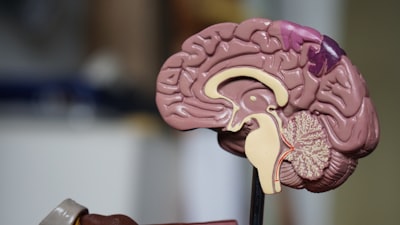
What is neuroplasticity?
For decades, scientists believed the adult brain was essentially fixed — that nerve cells could not regenerate and that brain structure was permanently set. That picture has changed dramatically in recent years. Neuroplasticity — the brain's ability to reorganize its connections and even generate new nerve cells — is now one of the most active fields in neuroscience.
Every experience, every thought, every new skill physically reshapes your brain. When you learn to play an instrument, speak a new language, or navigate an unfamiliar city, existing synapses grow stronger, new connections form, and sometimes entirely new neurons are created — a process called neurogenesis. What was science fiction 30 years ago is now established science.
💡 Did you know? London taxi drivers have a measurably larger hippocampus (the brain's memory center) than control groups — and it grows with the number of years they've been driving. Eleanor Maguire's landmark study (2000) proved that adult brains are structurally shaped by experience.
How the brain changes
Neuroplasticity operates on multiple levels. At the micro level, it's about synapses — the junctions between neurons. According to Hebb's principle ("neurons that fire together, wire together"), connections that are frequently activated grow stronger, while unused connections weaken and get pruned — a process called synaptic pruning. This explains why practice makes perfect, and why skills that aren't maintained gradually fade.
At the macro level, entire brain regions can reallocate their resources. If a sensory channel is damaged (e.g., vision), the brain can "repurpose" the abandoned cortex for other senses — blind people who read Braille activate the visual cortex for touch processing. The brain is not a computer with fixed circuits — it's a self-organizing biological machine that constantly optimizes itself.
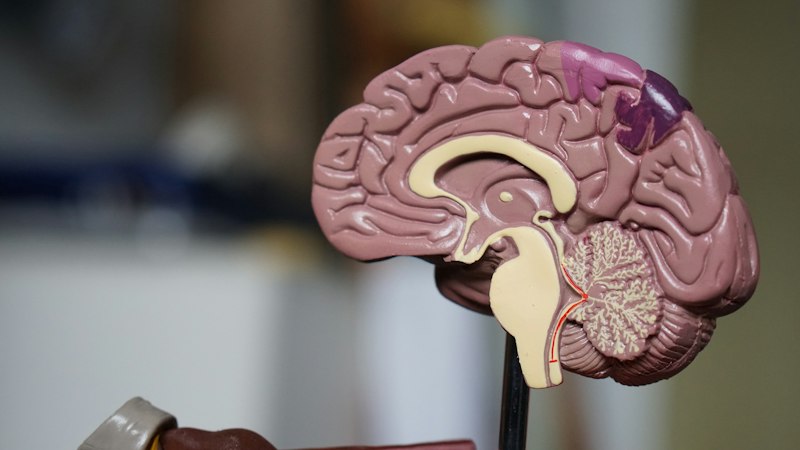
BDNF — The brain's growth fertilizer
BDNF (brain-derived neurotrophic factor) is a protein that plays the lead role in the brain's ability to change. It protects existing neurons, stimulates the growth of new synapses, and enables neurogenesis — the creation of new nerve cells, primarily in the hippocampus (the brain's memory center).
BDNF levels are powerfully influenced by lifestyle. Physical activity — especially aerobic exercise — is the most potent known BDNF booster. A study by Erickson et al. (2011) showed that walking 40 minutes three times a week for one year increased hippocampal volume by 2% in older adults — equivalent to reversing 1 to 2 years of age-related shrinkage.
Stress, sleep deprivation, and social isolation lower BDNF. Chronic stress can cut BDNF levels in the hippocampus in half, which explains the link between depression, chronic stress, and impaired memory. But the good news is that BDNF levels respond quickly to positive lifestyle changes — the effect is measurable after just a single workout.
🔬 Neurogenesis — the creation of new nerve cells — occurs primarily in the hippocampus and is linked to spatial memory, learning, and emotional regulation. Research shows that roughly 700 new neurons are born in the hippocampus every day in adults. Your lifestyle determines how many survive and integrate.
What threatens plasticity?
If plasticity is the brain's superpower, there are forces that weaken it. The most significant threats are:
- Chronic stress — Elevated cortisol shrinks the hippocampus and prefrontal cortex. Stressed individuals show poorer memory, less cognitive flexibility, and reduced creativity in studies.
- Sleep deprivation — During sleep, memories are consolidated and waste products are cleared through the glymphatic system. Even a single night of poor sleep measurably impairs working memory.
- Physical inactivity — A sedentary lifestyle reduces BDNF production and blood flow to the brain. Physical inactivity is one of the strongest risk factors for cognitive decline.
- Social isolation — Loneliness triggers stress responses and reduces the cognitive stimulation that social interaction provides. Meta-analyses show a 50% increased risk of dementia with chronic loneliness.
- Alcohol and drugs — Alcohol is directly neurotoxic and measurably shrinks brain volume. Even "moderate" consumption has been linked to faster cognitive aging in recent studies.
- A monotonous life — The brain prunes unused connections. Without new challenges — new languages, instruments, environments — plasticity stagnates.
How to optimize your brain
The best thing about neuroplasticity is that you're already doing things that affect it — the question is whether you're doing enough of the right things. Research points to five key factors:
- Move your body — especially cardio — Running, swimming, cycling, and dancing boost BDNF the most. 30 to 40 minutes of aerobic exercise 3 to 5 times a week shows the strongest effect. But all movement counts — walking, gardening, playing.
- Challenge your brain — Learn new things: languages, instruments, crafts. It's the novelty and the challenge that drive plasticity, not passive consumption. The difficulty should sit just outside your comfort zone.
- Prioritize sleep — Seven to eight hours allows for complete memory consolidation. Deep sleep (N3) and REM sleep have specific roles: N3 consolidates facts, REM consolidates procedures and emotional memories.
- Manage stress — Meditation measurably strengthens the prefrontal cortex after just 8 weeks (Holzel et al., 2011). Breathwork, time in nature, and journaling are other evidence-based methods.
- Be social — Social interaction simultaneously activates empathy, language, theory of mind, and emotion regulation — it's the most complex cognitive task we perform. Solo screen time doesn't replace it.
- Eat brain-friendly foods — Omega-3s (fatty fish), flavonoids (berries, dark chocolate), antioxidants (vegetables), and fermented foods. The Mediterranean diet has the strongest evidence for cognitive protection.

Cipoli analysis
Group comparison and patternsCipoli group comparison coming soon
In this section, we will compare Cipoli users with an active lifestyle and effective stress management to those with sedentary habits and high stress — and explore how it correlates with energy, sleep, cognitive experience, and quality of life.
The analysis will include:
Why isn't the analysis available yet? To create meaningful group comparisons, we need enough anonymized responses from our users. The more people who map their health, the better and more reliable the analyses become.
Help us get there faster
Invite a friend to Cipoli — the more of us there are, the smarter and more detailed our analyses become. Together, we are building the most compelling health dataset.
🌱Spread the word