What is morning light — and why is everyone talking about it?
Picture two kinds of mornings.
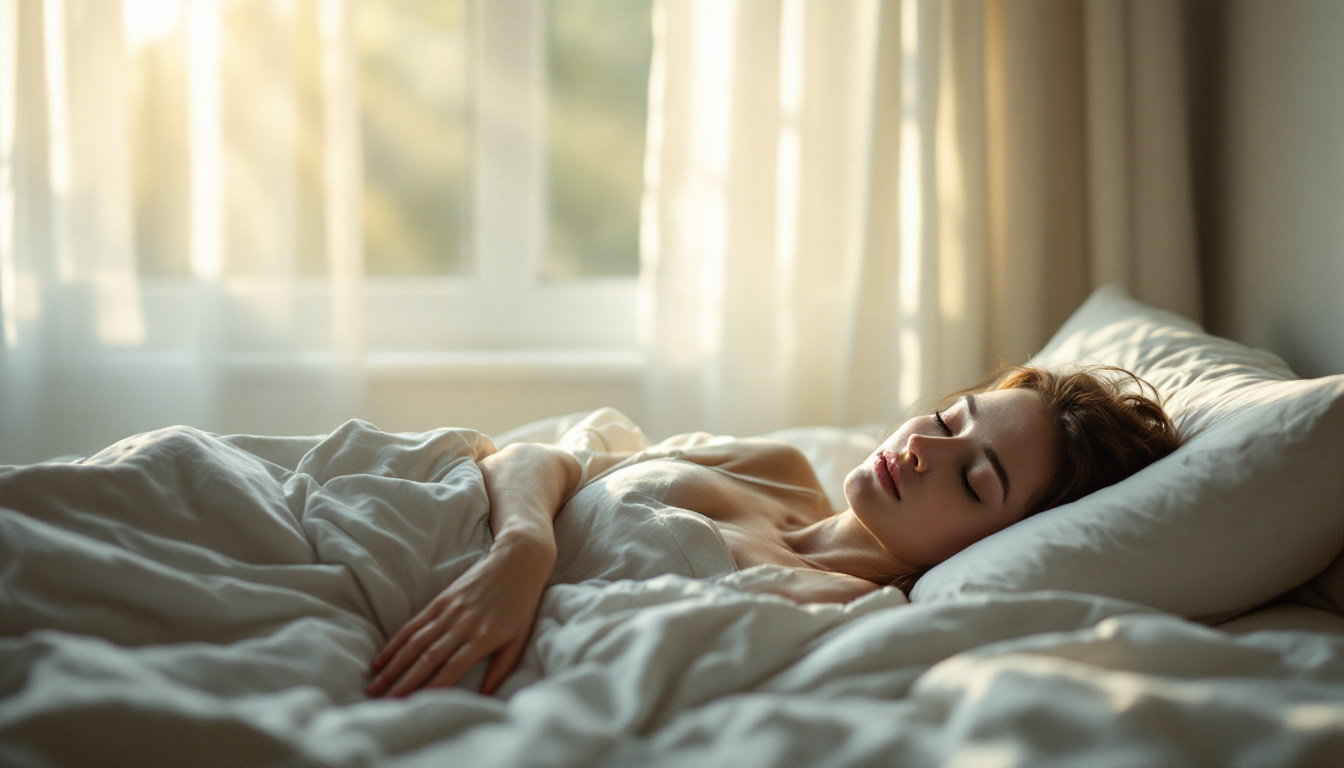
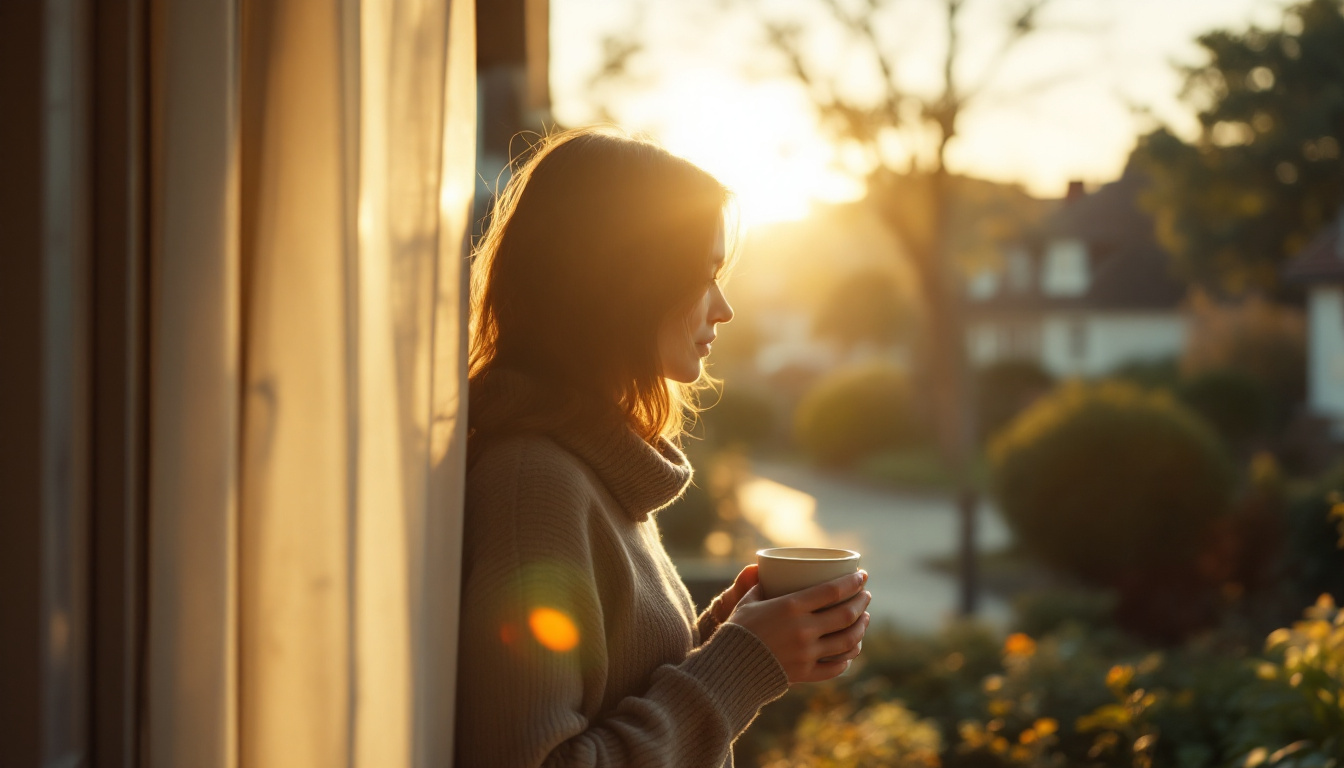
One begins with you stepping out the door — maybe a short walk, maybe just coffee on the front steps — and daylight hits your face. The other begins under the covers, in the glow of your phone, with the blinds down, and the first real dose of light doesn't arrive until sometime around lunch.
To your body's internal clock, these are two completely different messages. Morning light is the single most important signal that tells your body what time of day it is — and therefore when it's time to be awake, and eventually when it's time to fall asleep.
That's exactly what this article is about: how morning light sets your circadian rhythm, and what that has to do with your sleep. If you want the full picture of how sleep connects to the rest of your health, you'll find it in our pillar article Sömn — så hänger den ihop med resten av din hälsa. Here we're zooming in on a single puzzle piece — but that piece turns out to be surprisingly central.
Why does it matter? The clock behind your eyes needs to be set every day
Deep inside the brain, just behind the eyes, sits a small cluster of nerve cells called the suprachiasmatic nucleus — the SCN. You can think of it as the body's conductor: it keeps the beat for when hormones are released, when body temperature rises and falls, and when sleep pressure takes over.
The problem is that this clock doesn't keep perfect time on its own. In most people, the internal rhythm runs at roughly — but not exactly — 24 hours. Left alone, it would slowly drift out of phase with the day outside. That's why the clock has to be reset every day, and by far the most important timekeeper is light.
This isn't a hypothesis but established, experimentally demonstrated physiology. Czeisler, C. A. et al. (1989) showed in Science that light exposure can shift and reset the human circadian pacemaker, and Duffy, J. F. & Czeisler, C. A. (2009) summarize in a review how light's intensity, timing, and duration affect the human circadian rhythm. Light sets the clock — that can be stated plainly.
How does it work? In addition to the cells we see with, the eye has a special kind of light-sensitive cell — melanopsin-containing ganglion cells — discovered by Berson, D. M., Dunn, F. A. & Takao, M. (2002). They're not about vision. They work more like a light meter than a camera: they register how bright it is and send that signal directly to the SCN. That's why even people with severely impaired vision can, in some cases, still have a functioning light-driven circadian rhythm. And timing determines direction. Morning light advances the clock — the body interprets it as "the day has begun" and shifts the entire rhythm earlier, so evening sleepiness arrives sooner. Bright light late at night does the opposite: it delays the clock. That's a chapter of its own (we'll return to screens before bedtime in another article) — here it's enough to know that the same mechanism works in different directions depending on when the light arrives. Khalsa, S. B. S. et al. (2003) mapped this so-called phase response curve in humans in the Journal of Physiology: same light, different time of day, opposite effect on the clock. Outdoors beats indoors — by a wide margin. Light intensity is measured in lux, and this is where many people are surprised. Typical indoor lighting is a few hundred lux. An overcast day outdoors delivers thousands. A sunny day can deliver tens of thousands. The difference between your living room and a gray November morning outside isn't small — it's an order of magnitude or more. Even the grayest morning outdoors sends a much stronger clock signal than your ceiling light at home.A concrete illustration: Wright, K. P. et al. (2013) had participants camp for a week with only natural light — no electric light, no screens. The result, published in Current Biology, was that participants' circadian rhythms shifted earlier and synced with sunrise. The body knows what to do with daylight — it just needs access to it.
What does the research say about morning light and sleep?
Here it's important to keep two levels apart.
Level one: that light sets the clock. As we've seen, this is established physiology with experimental support going back decades. Czeisler and colleagues demonstrated it under controlled laboratory conditions as early as 1989, the mechanism in the eye was identified by Berson and colleagues in 2002, and the phase response curve — how the clock shifts depending on the timing of light — was mapped in humans by Khalsa and colleagues in 2003. There's not much doubt about that part. Level two: that more morning light in everyday life is linked to better sleep. Here we move from mechanism to association, and different rules apply. What does research observe in ordinary people living ordinary lives?The picture points consistently in the same direction. More daylight exposure, especially early in the day, is associated in studies with earlier sleep onset, better perceived sleep quality, and a more stable circadian rhythm. Wams, E. J. et al. (2017) examined in the journal Sleep how the timing of light exposure related to sleep architecture, and found that earlier and more abundant light exposure during the day was linked to more favorable sleep patterns. Figueiro, M. G. et al. (2017) observed in Sleep Health that office workers who got more light in the morning reported better sleep and mood than those working in light-poor environments.
At the same time, we should be honest about the limitations. Many of the level-two studies are small, short, or observational. When people who get plenty of morning light also sleep better, other factors may be at play — someone who walks to work every morning often differs from someone who doesn't in more ways than light exposure. These associations are not proof that morning light alone explains the differences in sleep or mood.
But what makes this particular field of research interesting is the combination: a solid, experimentally demonstrated mechanism at the foundation (light shifts the clock) and observational data pointing in the direction the mechanism predicts (early light is observed alongside earlier and more stable sleep). That's why we classify the evidence as promising rather than established — the mechanism is strong, but the link to everyday health outcomes still rests largely on smaller studies and associations.
Also worth noting is the camping study by Wright and colleagues again: it showed not only that rhythms shifted earlier, but that the differences between "morning people" and "night owls" shrank when everyone got the same natural light environment. Part of what we experience as our personal chronotype thus seems to be connected to how much light we get — and when.
Practical advice — how to build morning light into your daily routine
The beauty of morning light as a habit is that it's free, simple, and easy to build into things you already do. Common recommendations from sleep researchers tend to land roughly here:
- 10–30 minutes of outdoor light within an hour of waking. It doesn't have to be a workout — a short walk, coffee on the porch, or getting off the bus one stop early goes a long way. Many people find that this first hour makes the biggest difference in how the day and evening feel.
- Breakfast by the window as the next-best option. Window glass lets through less light than you'd think, and indoor levels are considerably lower than outdoors — but the spot closest to the window is still brighter than the interior of the room. Better than nothing, not as good as outside.
- Dark seasons: take the light you can get. A winter morning in the northern latitudes won't offer tens of thousands of lux, and that's okay. The clock responds to the light it gets, and the timing — that the signal comes early — appears to matter a great deal even when the intensity is lower. A gray walk in dawn light is still a much stronger signal than your ceiling light.
- Anchor the light to something you already do. Habits stick more easily when they latch onto an existing routine: your coffee, the dog walk, the commute. Consistency matters — the clock is set every day, not once and for all.
And if you're wondering how sleep, in turn, connects to your body's recovery, there's more to read in Sömn och återhämtning.

Cipoli analysis
Cipoli's interpretationMorning light is in many ways the most trackable habit in the entire sleep cluster — it's not about what you buy or how you sleep, but about something as simple as when in the day you get outside. In Cipoli's model, it belongs among the quiet rhythm-setters of your lifestyle: the timing of your first light exposure, what your morning routine looks like, and how consistent it is from day to day.
What we often see in our mapping is that sleep habits don't live in isolation. People who get daylight early often do so because their morning includes movement — a walk, a bike ride — and those same people tend to report more consistent sleep times. Which drives which, our data cannot determine; these are observations, not scientific conclusions. But the pattern is consistent with what research observes: timing and regularity of light exposure are observed alongside a more stable rhythm.
What's interesting from a mapping perspective is that morning light is one of the few sleep-related factors you can actually change without changing sleep itself — you adjust the morning, not the night. For anyone looking for a place to start in their sleep cluster, it's often the lowest-hanging fruit.

Your personal connection
Based on your profileSources and further reading
- Czeisler, C. A. et al. (1989). Bright light induction of strong (type 0) resetting of the human circadian pacemaker. Science
- Duffy, J. F. & Czeisler, C. A. (2009). Effect of light on human circadian physiology. Sleep Medicine Clinics
- Berson, D. M., Dunn, F. A. & Takao, M. (2002). Phototransduction by retinal ganglion cells that set the circadian clock. Science
- Khalsa, S. B. S. et al. (2003). A phase response curve to single bright light pulses in human subjects. Journal of Physiology
- Wright, K. P. et al. (2013). Entrainment of the human circadian clock to the natural light-dark cycle. Current Biology
- Wams, E. J. et al. (2017). Linking light exposure and subsequent sleep: a field polysomnography study in humans. Sleep
- Figueiro, M. G. et al. (2017). The impact of daytime light exposures on sleep and mood in office workers. Sleep Health