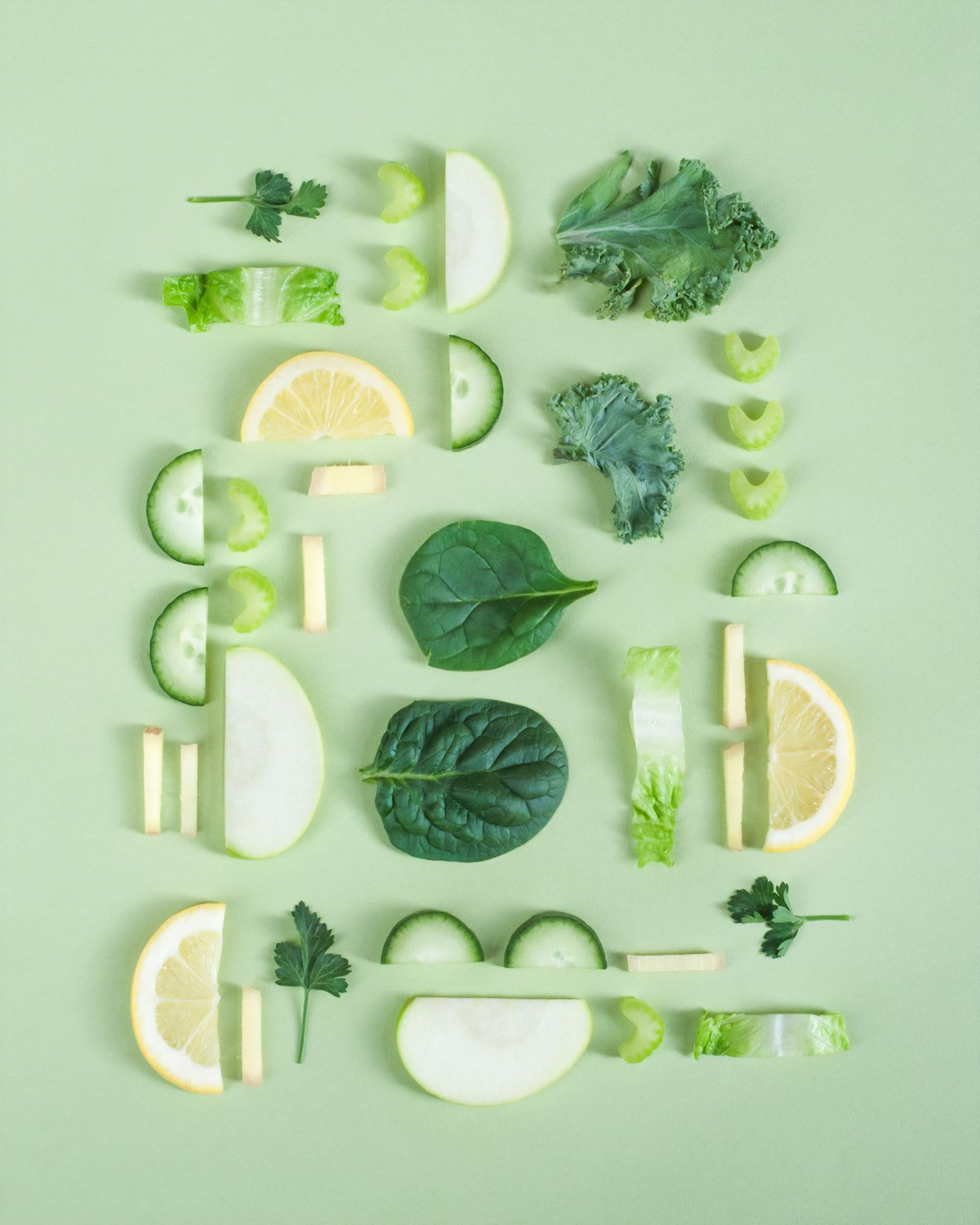
Why variety beats quantity?
Most people know they should eat greens. But one thing that often gets overlooked is that breadth — how many different plants you eat — may be at least as important as the amount. The gut microbiome consists of hundreds of different bacterial species, and different species thrive on different kinds of fiber and plant compounds. Someone who eats the same five vegetables every week feeds only part of their microbiome; someone who varies widely gives more species something to live on. That is the logic behind the reference point of 'around 30 different plants a week' that has emerged in microbiome research. And plants here mean more than vegetables: fruit, berries, legumes, whole grains, nuts, seeds, herbs, and spices all count. That makes the target more reachable than it first sounds — a handful of different spices and a scoop of mixed seeds quickly add up. The point is not to hit exactly 30, but to deliberately broaden instead of running on autopilot.
What the research says
The large citizen-science effort American Gut Project (McDonald et al., published in mSystems 2018) collected gut samples from thousands of people. One of the clearest signals: those who ate more than 30 different plants a week had a more diverse gut microbiome than those who ate ten or fewer. It is an observational association — not proof of cause — but it is where the '30 plants' reference point comes from.
Each plant carries its own mix of fiber types and plant compounds (polyphenols). Different gut bacteria specialize in different substrates. Breadth in the diet therefore means breadth in the 'menu' for the microbiome. Research suggests that a diverse gut microbiome is generally associated with better gut health — although what counts as 'optimal' is still being explored.
The count is generous: vegetables, fruit, berries, legumes, whole grains, nuts, seeds, herbs, and spices are all separate plants. Different varieties of the same kind count separately (red and green peppers, different beans). So you do not need to eat large amounts of everything — a pinch here and a variety there quickly builds up the number across a week.
Get started in 3 steps
You do not need to count every plant for the rest of your life. The point is to make variety a habit — a few simple tricks make the number rise almost on its own.
Write down which plants you actually eat in a typical week — vegetables, fruit, legumes, whole grains, nuts, seeds, herbs, spices. Most people are surprised in both directions: some are already near 20, others realize how one-sided it has become. This gives you a starting point without changing anything yet.
Choose one new plant each time you shop — a vegetable, fruit, or legume you rarely buy. Rotate colors and types instead of buying exactly the same every time. Frozen mixes and ready-made bean blends are shortcuts: a bag of four kinds of beans gives four plants at once.
Make variety part of how you cook: a scoop of mixed seeds on your oatmeal, a mixed salad instead of one type of leaf, several herbs and spices in the stew, alternating between different whole grains (oats, barley, rye, buckwheat). Once breadth is built into your base recipes, you no longer need to think about it actively.
Easy ways to broaden
A jar of mixed seeds (flax, sunflower, pumpkin, sesame, chia) and one of mixed nuts give you several plants in a single move. A tablespoon on your oatmeal, in a salad, or on yogurt — five new plants with almost no effort.
Fresh and dried herbs and spices count as plants. Parsley, basil, oregano, turmeric, ginger, cinnamon, cumin — a well-stocked spice shelf can on its own account for a large share of the week's count, and it lifts the flavor of what you already cook.
Frozen vegetable and berry mixes are nutritionally on par with fresh and often contain several varieties in the same bag. Stir-fry mix, berry mix, peas and corn — convenient ways to get breadth even in the weeks when planning falls apart.

Cipoli-analys
What does the data show about plant variety and gut health?Here we will show a group comparison between Cipoli users with high versus low plant variety in their diet — and how it relates to the Gut Health Index over time.
- ›Difference in Gut Health Index between high and low plant variety
- ›Relationship between dietary breadth and digestive issues
- ›Correlation with fiber intake and general well-being
We need more responses to create meaningful analyses. The more people who map their health, the better and more reliable the analyses become.

Your personal connection
Current index → potential with the habitSummary
- It is not just the amount of greens that seems to count for the gut, but the breadth — different fibers feed different bacteria.
- The American Gut Project (McDonald et al., mSystems 2018) linked more than 30 different plants a week to a more diverse gut microbiome (an observational association).
- Everything plant-based counts: vegetables, fruit, berries, legumes, whole grains, nuts, seeds, herbs, and spices.
- Build the habit step by step — map your week, add one new variety at a time, and build breadth into your base recipes.