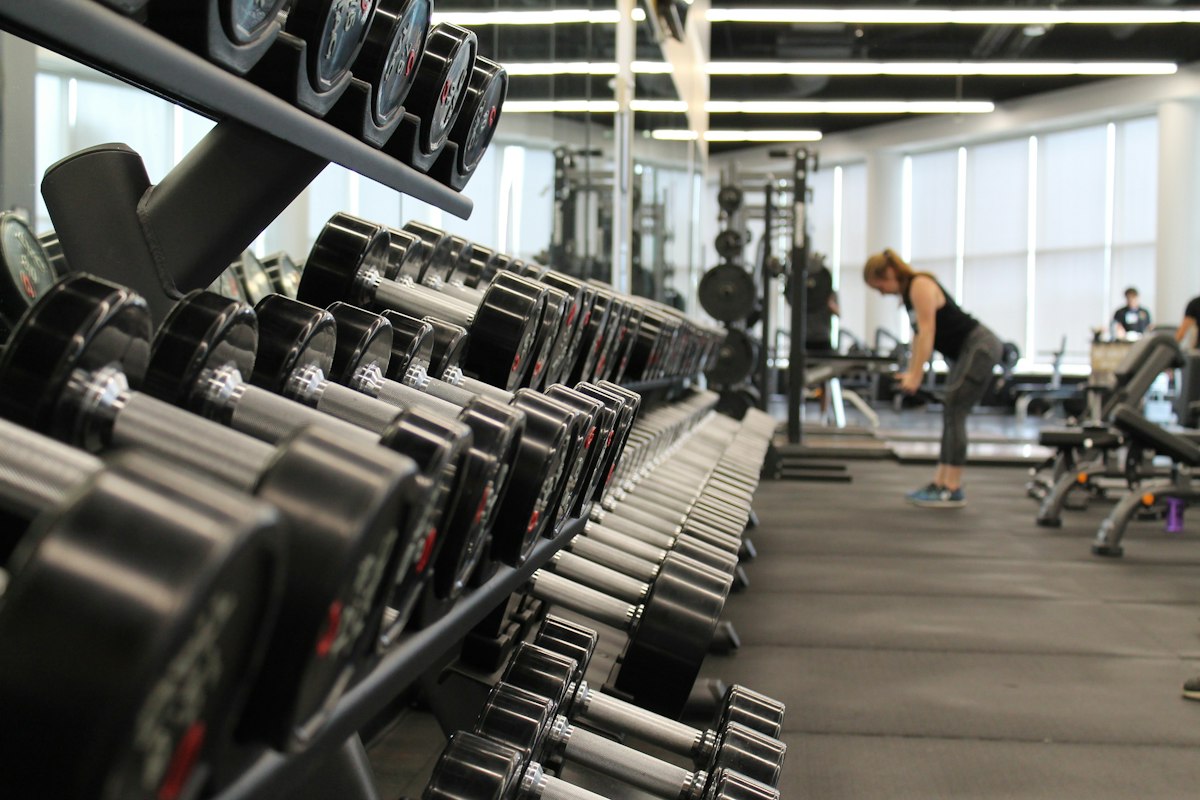
Why strength training?
Starting in your 30s, your body begins losing muscle mass — roughly 3 to 5% per decade. The process is called sarcopenia and it accelerates after 50. Strength training is the only proven method that effectively slows and reverses it. But the benefits extend far beyond muscle: stronger bones and joints, better insulin sensitivity, a higher basal metabolic rate, less inflammation, and documented effects on anxiety and depression. The WHO recommends resistance training at least 2 times per week for all adults — yet only 20 to 30% reach that level.
What the research says
A meta-analysis in the British Journal of Sports Medicine (2022) covering 16 studies and 480,000 participants found that 30 to 60 minutes of strength training per week reduces the risk of premature death by 10 to 17%, independent of aerobic exercise. The effect was most pronounced at 2 to 3 sessions per week.
Mechanical loading stimulates osteoblasts to build new bone. Strength training is the most effective method for preserving and building bone density — especially important for women after menopause, where it can reverse bone loss into bone building.
A meta-analysis in JAMA Psychiatry (2018) covering 33 studies and 1,877 participants found that strength training significantly reduces symptoms of anxiety and depression — independent of physical improvement. Overcoming challenges plays a key role.
Build strength in 3 steps
This program requires no gym — just your body and optionally a pair of dumbbells or water bottles. Two sessions per week, 25 to 35 minutes each, with at least one rest day between.
2 sessions per week, technique over weight. Squats (3x10), wall or floor push-ups (3x8), plank (3x20 sec), rows with water bottles (3x10). Rest 60 sec between sets. The whole session takes 20 minutes.
Add 2 reps per set (3x12 instead of 3x10). Add lunges (3x8 per leg) and side plank (3x15 sec per side). If wall push-ups are easy, move to knees or full floor. Sessions now take 25 to 30 minutes.
Introduce resistance: a backpack with books, dumbbells, or water bottles. Weighted squats (3x10), push-ups with a pause at the bottom (3x8), dumbbell deadlifts (3x10). Plank increases to 3x30 sec.
The key foundational exercises
Compound exercises that work multiple muscle groups at once. Squats build quads, glutes, and core; deadlifts train the entire posterior chain — hamstrings, glutes, and back. Start with bodyweight, keep your back straight, and focus on technique.
Push-ups work chest, shoulders, and triceps and are scalable: against a wall, on knees, or full. Rows work the upper back and posture — an important counterbalance to all the forward-leaning at screens and desks.
The plank strengthens your entire core — abs, back, and pelvic floor — and protects your back in everything you do. Lunges work quads, glutes, and balance one leg at a time, for everyday stability: stairs, cycling, and running.

Cipoli-analys
What does the data show about strength training and health?Here we will show a group comparison between Cipoli users who strength train regularly versus those who do not — and how it relates to health and energy over time.
- ›Health Index comparison between the groups
- ›Relationship between strength training, sleep, and energy levels
- ›Correlations with mood, stress, and bone health
We need more responses to create meaningful analyses. The more people who map their health, the better and more reliable the analyses become.

Your personal connection
Current index → potential with the habitSummary
- Strength training slows and reverses age-related muscle loss (sarcopenia).
- The WHO recommends at least 2 sessions per week — even 30 min/week lowers the risk of premature death by 10 to 17%.
- The effects reach bones, metabolism, blood sugar, and mental health.
- No gym required — start with bodyweight and build up over 4 weeks with compound exercises.