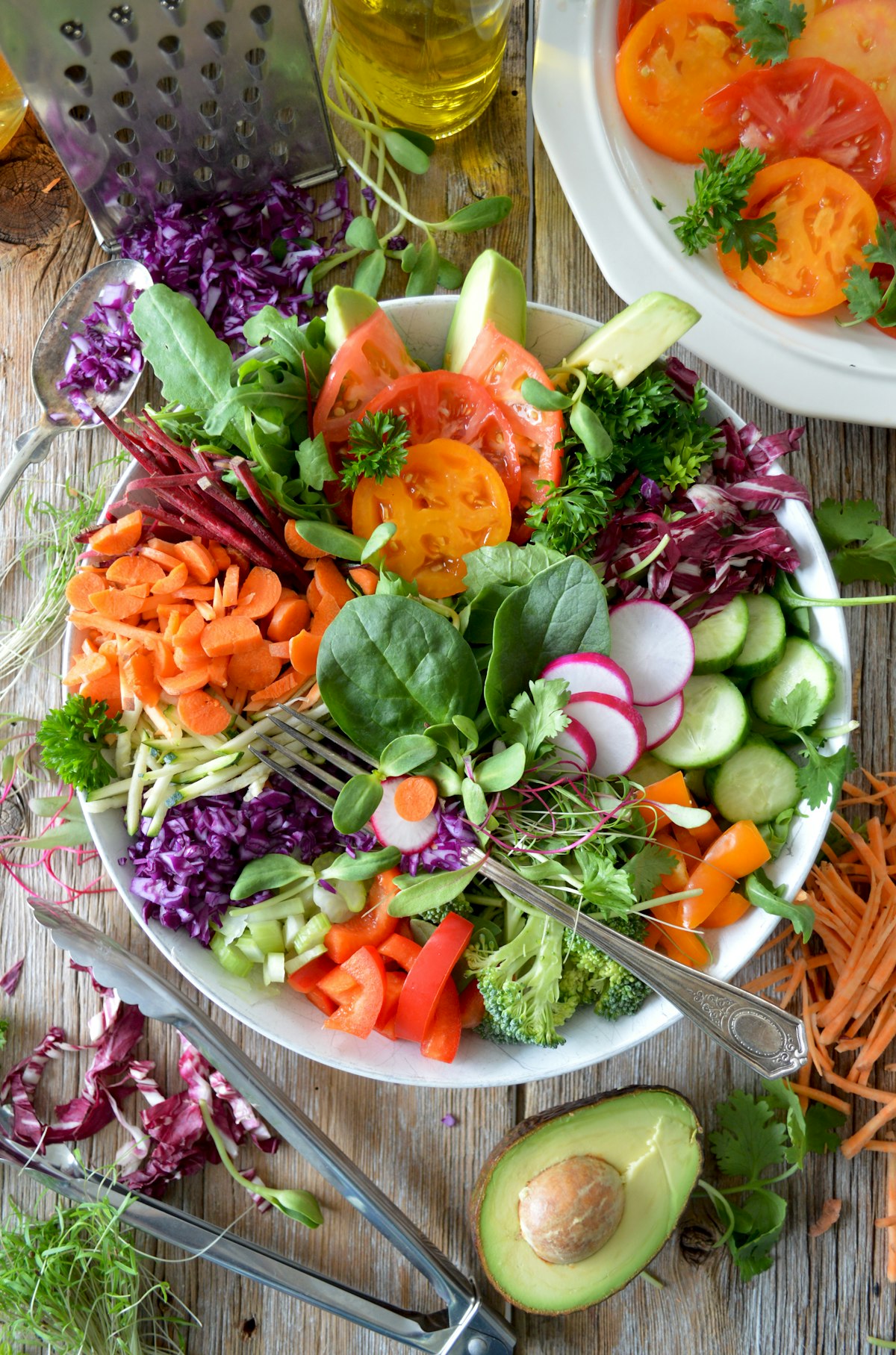
Why vegetables every day?
Few habits give back so much for so little effort as eating vegetables regularly. It is not about perfection or expensive superfoods — it is about making greens an obvious part of your day. You build this habit in small steps.
What the research says
Swedish guidelines recommend at least 500 g of vegetables, fruit and berries per day. A meta-analysis (Aune 2017, ~2 million participants) linked 800 g/day to a 31% lower risk of premature death.
The fiber in vegetables fuels your gut bacteria, which in turn produce short-chain fatty acids with anti-inflammatory effects. Variety is key — different plants feed different bacteria.
It is not a single superfood that makes the difference, but the range. Aim for several colors across the week — each color signals different protective plant compounds.
Build the habit in 3 steps
You do not need to change everything at once. This plan adds greens gradually, starting at a meal you already eat.
Start small and concrete: add a handful of vegetables or a small salad to lunch, every day. The meal you already eat just needs an addition — no overhaul.
Always keep something green at home that needs no cooking: cherry tomatoes, carrots, baby spinach, frozen broccoli. What is visible and easy gets eaten.
Once lunch is set, add greens to one more meal — breakfast or dinner. Aim for several colors across the week.
Easy ways to add more
Frozen vegetables are nutritionally on par with fresh, last a long time, and need no planning. Broccoli, peas, spinach and berries straight into the pan or smoothie.
A handful of spinach or frozen berries in a smoothie is barely noticeable in taste but adds a whole portion. Great for days when greens would not happen otherwise.
Grated carrot in the meat sauce, spinach in the omelette, lentils in the soup. Vegetables do not have to be a separate dish — they can slip into your favorites.

Cipoli-analys
What does the data show about vegetable intake?Here we will show a group comparison between Cipoli users with high versus low vegetable intake — and how it relates to the Diet Index and gut health over time.
- ›Difference in Diet Index between the groups
- ›Relationship between vegetable intake and digestive issues
- ›Correlation with energy and weight stability
We need more responses to create meaningful analyses. The more people who map their health, the better and more reliable the analyses become.

Your personal connection
Current index → potential with the habitSummary
- At least 500 g of vegetables, fruit and berries per day is a robust health target.
- Start with one portion at lunch and make green the default at home.
- Variety and fiber feed the microbiome — several colors across the week.
- The freezer, smoothies and hiding greens in favorite dishes make the habit sustainable.